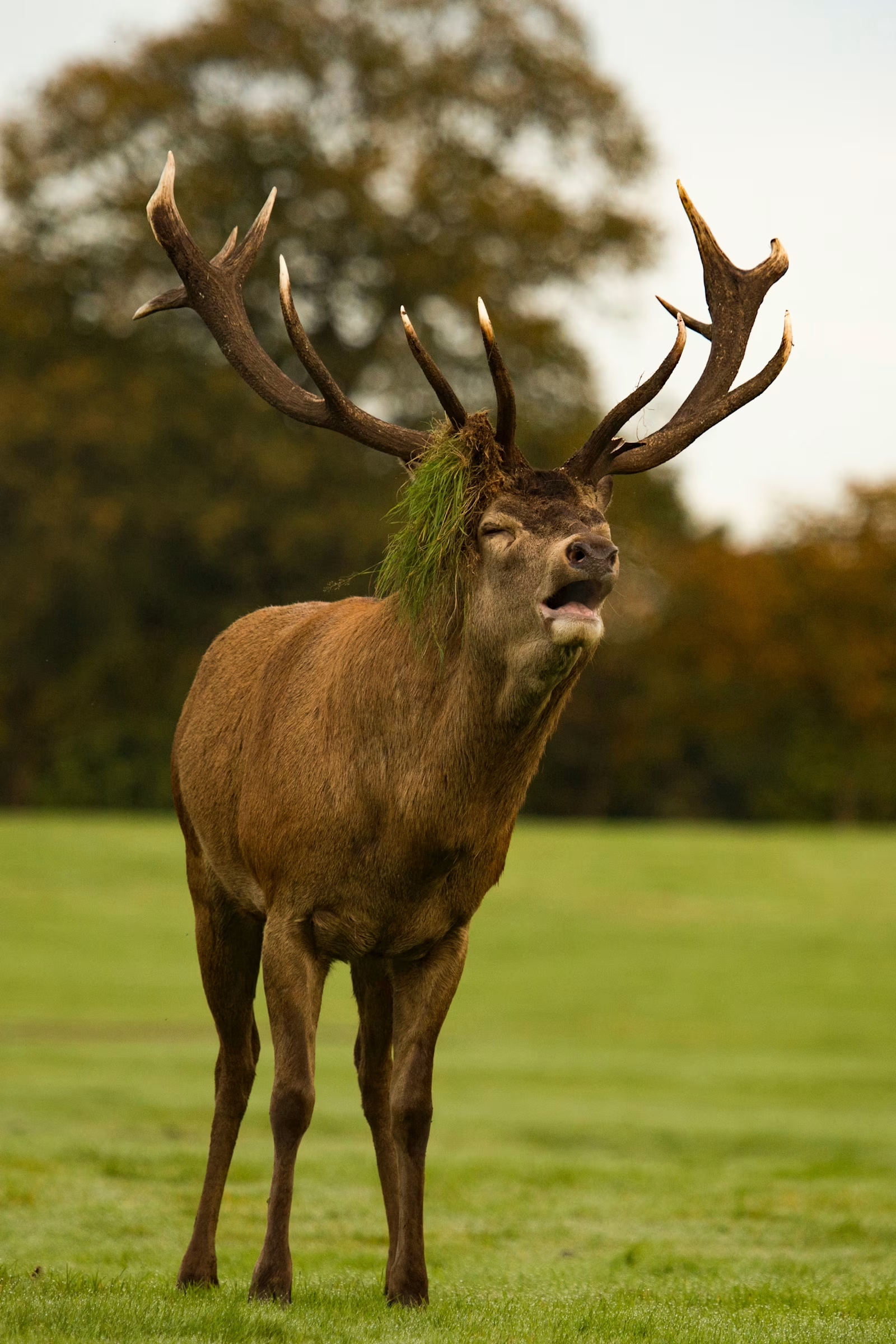
Deers!
The word deer was originally broad in meaning, becoming more specific with time. Old English dēor and Middle English der meant a wild animal of any kind. Cognates of Old English dēor in other dead Germanic languages have the general sense of animal, such as Old High German tior, Old Norse djur or dȳr, Gothic dius, Old Saxon dier, and Old Frisian diar.[3] This general sense gave way to the modern English sense by the end of the Middle English period, around 1500. All modern Germanic languages save English and Scots retain the more general sense: for example, German Tier and Norwegian dyr mean animal.[4] For many types of deer in modern English usage, the male is a buck and the female a doe, but the terms vary with dialect, and according to the size of the species. The male red deer is a stag, while for other large species the male is a bull, the female a cow, as in cattle. In older usage, the male of any species is a hart, especially if over five years old, and the female is a hind, especially if three or more years old.[5] The young of small species is a fawn and of large species a calf; a very small young may be a kid. A castrated male is a havier.[6] A group of any species is a herd. The adjective of relation is cervine; like the family name Cervidae, this is from Latin: cervus, meaning stag or deer.